Farmers
Our next phase will pilot a farmer network with access to piglets, rearing guidance and a planned buy-back arrangement.
 Find us
LEISANG · CHURACHANDPUR · MANIPUR
We rear pigs in Churachandpur for six to eight months, sell them live at market weight for slaughter, and are building a support network for local pig farmers.
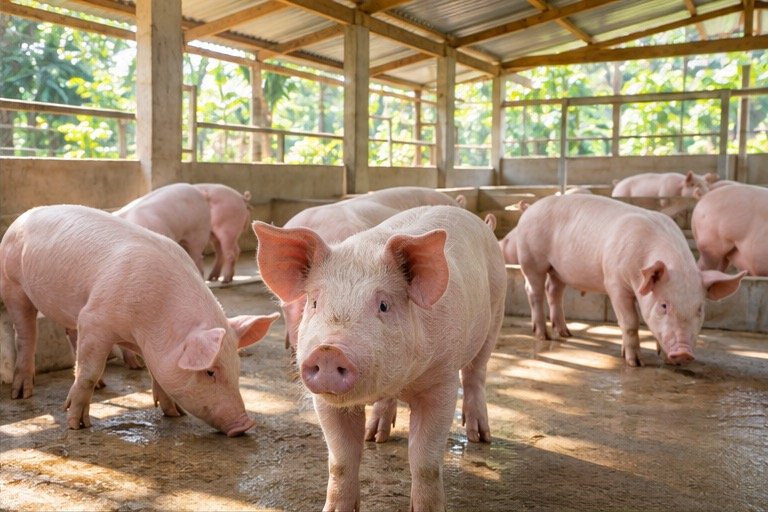
 Illustrative imagery
THE FARM
Churachandpur has strong demand for pork, and buyers often source pigs and pork from outside Manipur. We’re expanding local rearing capacity so buyers can source more market-weight pigs closer to home.
Our team has trained at ICAR in Guwahati in scientific pig farming. We’re applying that training to a farm model built around clean housing, planned feeding, animal health and batch records.
THE REARING CYCLE
We source weaned piglets for fattening, with a focus on Large White Yorkshire.
We focus on clean housing, planned feeding and routine health checks. Batch records track feed, health and weight.
Once pigs reach market weight, we sell them live to local buyers who purchase them for slaughter.
PARTNERSHIPS
Years of disruption in Manipur have limited access to steady work. As the farm grows, we plan to hire locally and help more farmers earn income from pig rearing.
Our next phase will pilot a farmer network with access to piglets, rearing guidance and a planned buy-back arrangement.
We’re building relationships with traders, butchers and other local buyers who purchase market-weight pigs for slaughter.
Feed suppliers, breeders, veterinary professionals and transporters all have a role in growing the local supply chain.
THE siZo LEAF
The siZo leaf is held in high regard by the Vaiphei community of Manipur. We use it as a symbol of our connection to the people and place we call home.